
Canal Painting - The Power of Locks.
The Boater's Perspective
What you see in this painting depends on what first catches your attention. Still waters reflect the cottage amidst the leaves and blue sky to the right. The winding gear dominates the seen. It’s industrial technology and brings forth thoughts of action, and the smells of oil and rust. Of muddy waters churning as it rushes loudly into the lock below. Not at this moment though, it’s a tranquil scene in contrast to the moment of action.
Simply Powerful
The power of the lock comes from the gates, paddles, and winding gear. It’s a breathtakingly simple concept. The technology of its day. Open the gate, drive the boat in, close the gate, wind the gear by the opposite gate to raise the paddles to either raise or lower the water, depending on which way you’re going. When the water is level with the direction of travel, open the gates, drive the boat out, and close the gates, and finally wind the gears down. Then off you go. It can be hard work, especially if the lock is in need of maintainance or you’re too impatient and try to open the gates too soon.
Deceptively Peaceful
Water is powerful in any volume. This is the calm before the violence of action. Locks are most dangerous point of the canal, and should always be treated with respect, but how marvellous they are. They fascinate. enabling the transportation of vast weights of heavy goods from place to place. All done by manpower and horsepower and without using motors. With the advent of the engine, they became even more powerful. Not fast though, which is fine for heavy cargoes but not perishables. Eventually they were superceded by the train and ultimately abandoned for decades. Until the revival began in the 1960’s and 70s. Now they’re back with a vengence.
The reflections of the cottage in the water remind me of the paddles below the surface. Often leaky and hard to move against the powerfull pressure of water held back. Initially resisting efforts to open them for the filling of the lock.
Canal Connection
The canal is a unique landscape, you can travel by boat across the country, and if you fancy a walk, jump off and stretch your legs for a bit. Unlike rivers, you can find mooring with ease and be within walking distance of the most fabulous cities. Life on the canal is slow, speed is not an option, and it forces you to live in the moment, close to nature, and more appreciative of the little things in life. Weather may colour the experience, but there’s no such thing as bad weather, just wrong clothes, as Billy Connolly used to say.
I’ve spent many an hour contemplating locks, from the perspective of working the lock and stearing the boat. It takes about 15 minutes to go through them if everything is set up right. Longer if it isn’t, or the canal is busy, or there’s a water shortage. Or if a paddle has been left open or 100 other minor little incidents that can slow you down. Each lock is different, all have quirks and foibles that are peculiar to them. Just like anything that’s been around over 100 yearsand often double that. Different machinery and different locations combine to make each lock an individual experience.
The cottage behind the lock would have been home to the lock keeper responsible for ensuring the smooth running of his pitch. In this case, we’re looking south towards Oxford on the Oxford Canal in Cropredy. It’s quiet now, with long gaps between narrow boats, but I can imagine how busy it once was, in constant use with boats waiting to go through. It often gets that busy during summer when the hire boats swell the numbers that go through and especially around festival time.
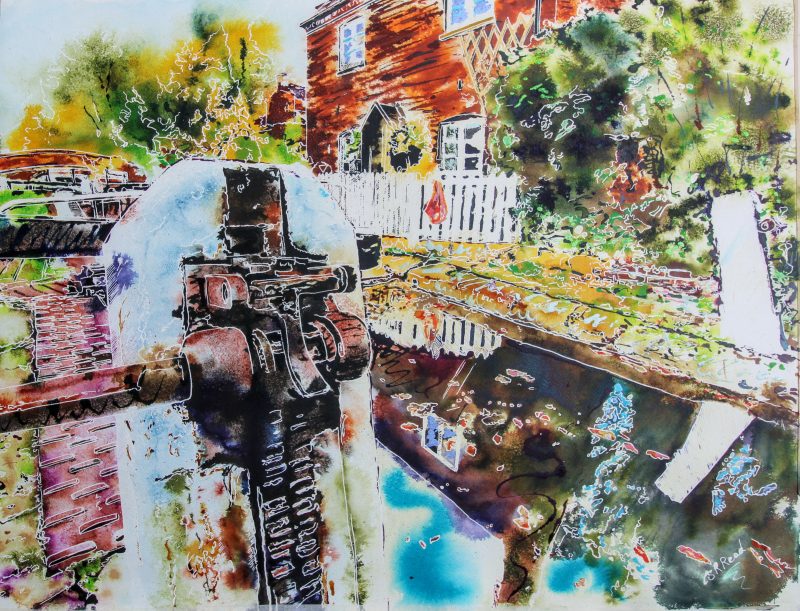
Cropredy Lock is sold. Prints will be available in the near future. In the meantime, you can explore my other canal inspired paintings here
