

Fragments of Edinburgh – Original Painting
About the Image:
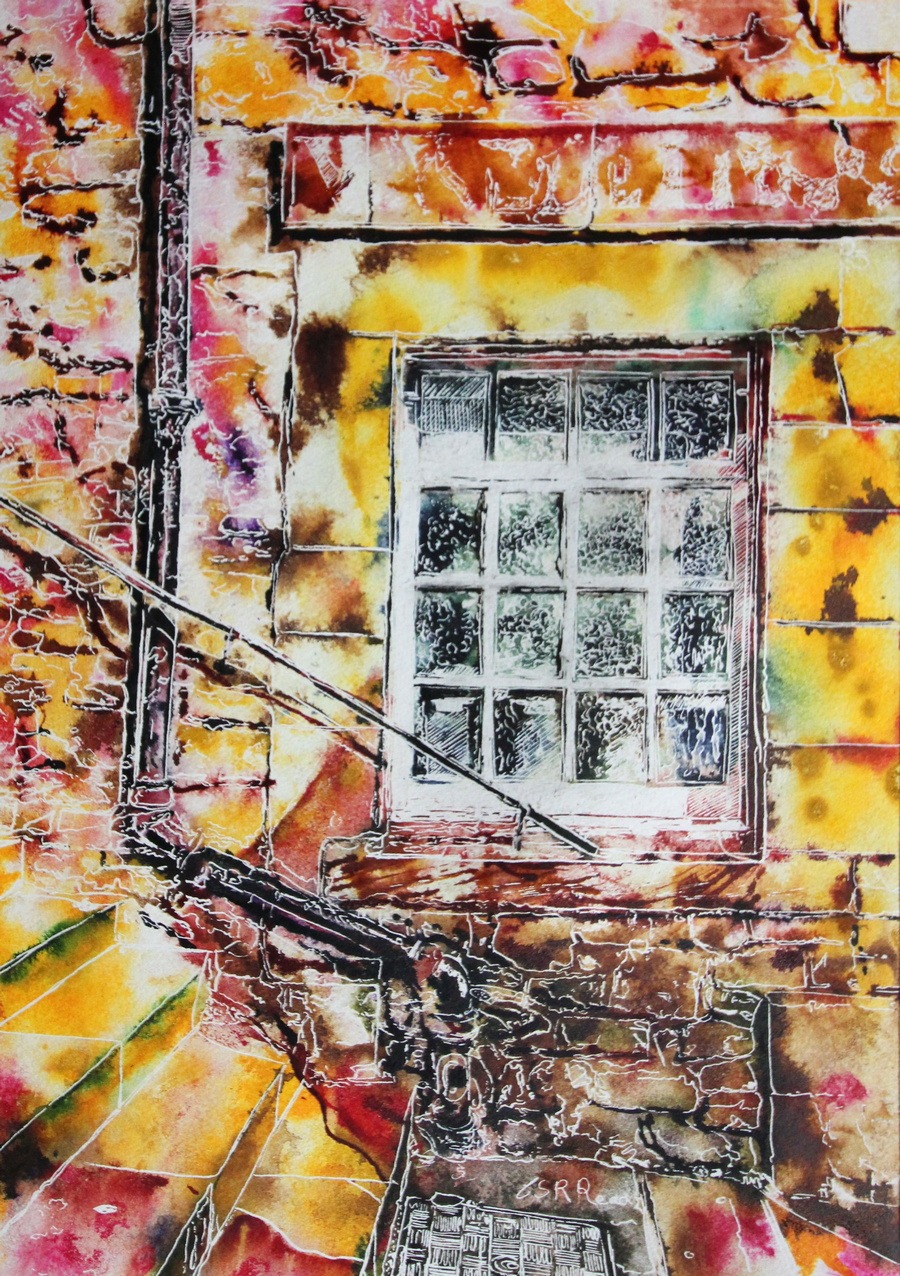
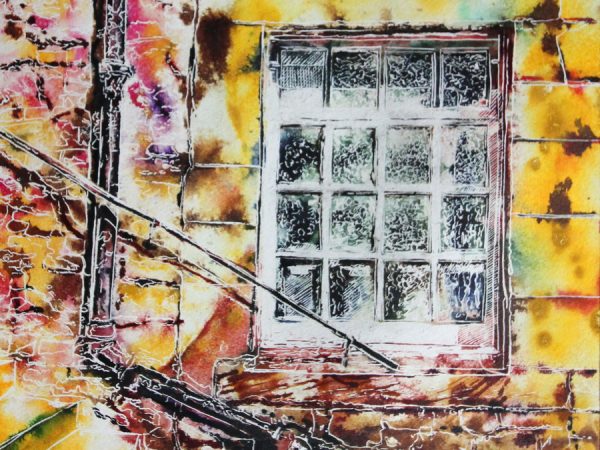
Fragments of Edinburgh. Alien writing on the signs, mysterious marks texture patterns, brilliant colours. Colours vibrant and unfamiliar to the stone streets of Edinburgh.
Everything about this scene shows the passage of time. From weathered stone, to the built-up dirt and the peeling paint on the drain pipe. Can you make out the illegible lettering of the painted sign. It’s been repainted and rewritten so many times. Now it’s old and so worn down that only fragments of letters remain. The words themselves are long forgotten.
Since I began creating abstracts, mark making has been a fascination. Why does a human feel the need to create patterns and recreate what she sees throughout the world onto whatever material she can find? Every culture uses the same basic marks and patterns to differing degrees and with vastly differing results.
Here. we have a fragment of Edinburgh, a spot chosen because the shapes and textures caught my eye. Standing on steps, with a handrail, a drain pipe, a window, and a wall. A location near the top of Castle hill. They have seen decades of wear and tear in a location that feels extremes of weather full sun and strong winds by the walls of an ancient and still active castle. People have marched past, run down, skipped up, raced by, and drudged up these steps in all kinds of weather. I wonder how many even notice this little window, or the lives being led inside.
The building is the Contini cannonball restaurant and bar. Also known as Cannonball House because there’s a cannonball to the right of one of the upstairs windows on the Castle wynd side. Conflicting theories about how it got there exist. It was either a stray cannonball during the fighting of the Jacobite rebellion or fired as an engineering test linked to water works.
Edinburgh
I had a working title of “Where’s My Phone, as there was a phone case on the windowsill, but I decided to change it. I thought it was a phone at first, and I wondered how likely it was that someone could leave a phone here by accident. It’s a busy passageway, not somewhere you’d stop for a selfie or rest to enjoy the view. The passageway is about two metres wide, and is not far from the public conveniences, so it wouldn’t be very pleasant if you did. Mercifully the wind that whips down it means any smell disappears quickly.
The patterns on the drain in the foreground caught my attention. More mark making, this timeas a functional safety feature. Honestly, I might be obsessed. Follow the iron drain upwards, where it frames a window, glazed with patterned, textured glass, to obscure what’s inside but let in light.
As I said, it’s a fragment of Edinburgh, a glimpse of a long and ancient history. A collection of mundane, normal features that capture historic and everyday life. An indicator of technology’s evolution and the skills that have been handed down and evolved over millennia of human existence. Knowledge that is still used today. Inventions with origins lost in time and so crucial to modern life. Steps, glasswork, stonework, carpentry, plumbing, metalwork, and drainage, mark making, and writing.and even electronics and plastics – evidence of so many human achievements.


Reviews
There are no reviews yet.